
Galaxy Structure & Dynamics
Research Group at the MPIA
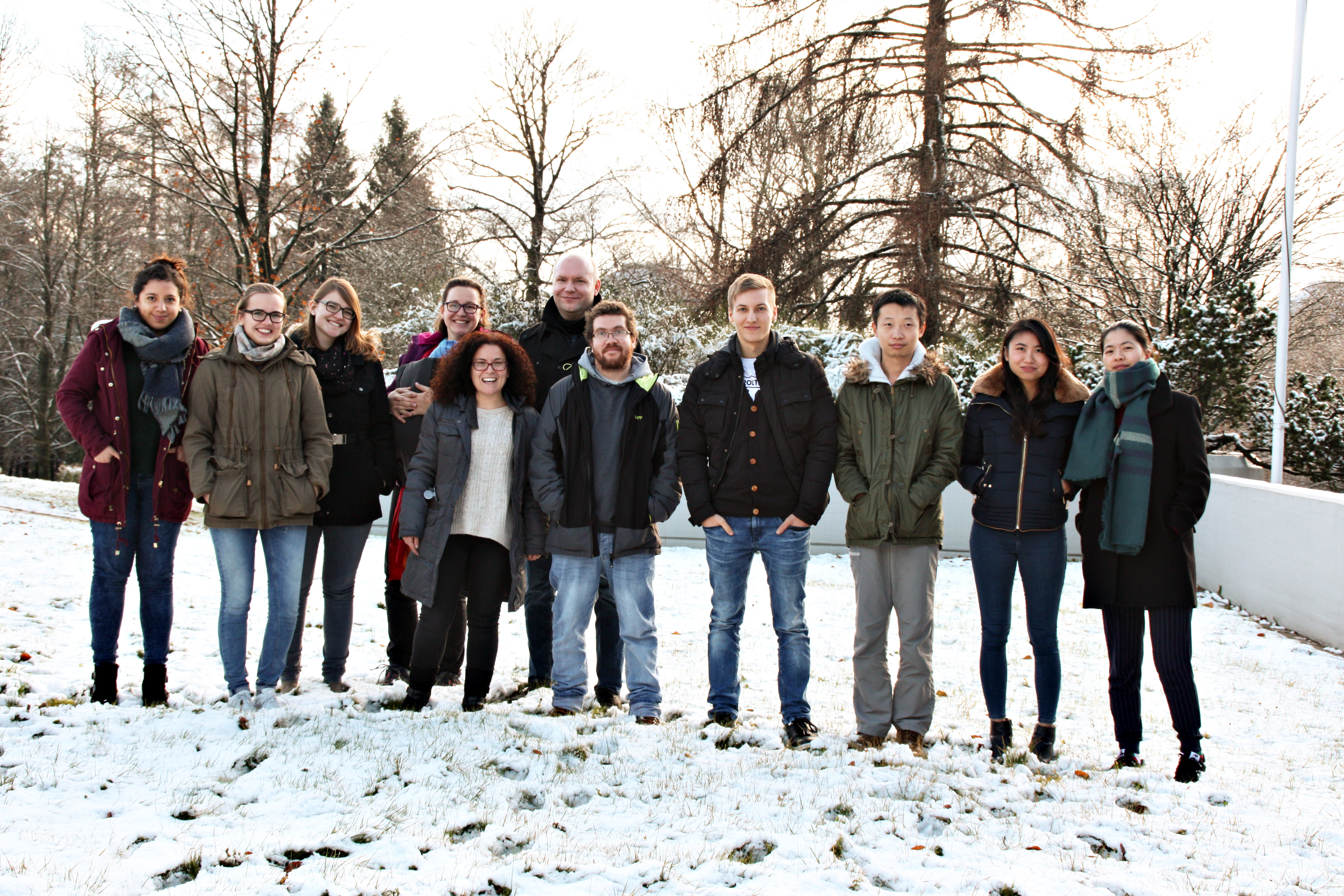
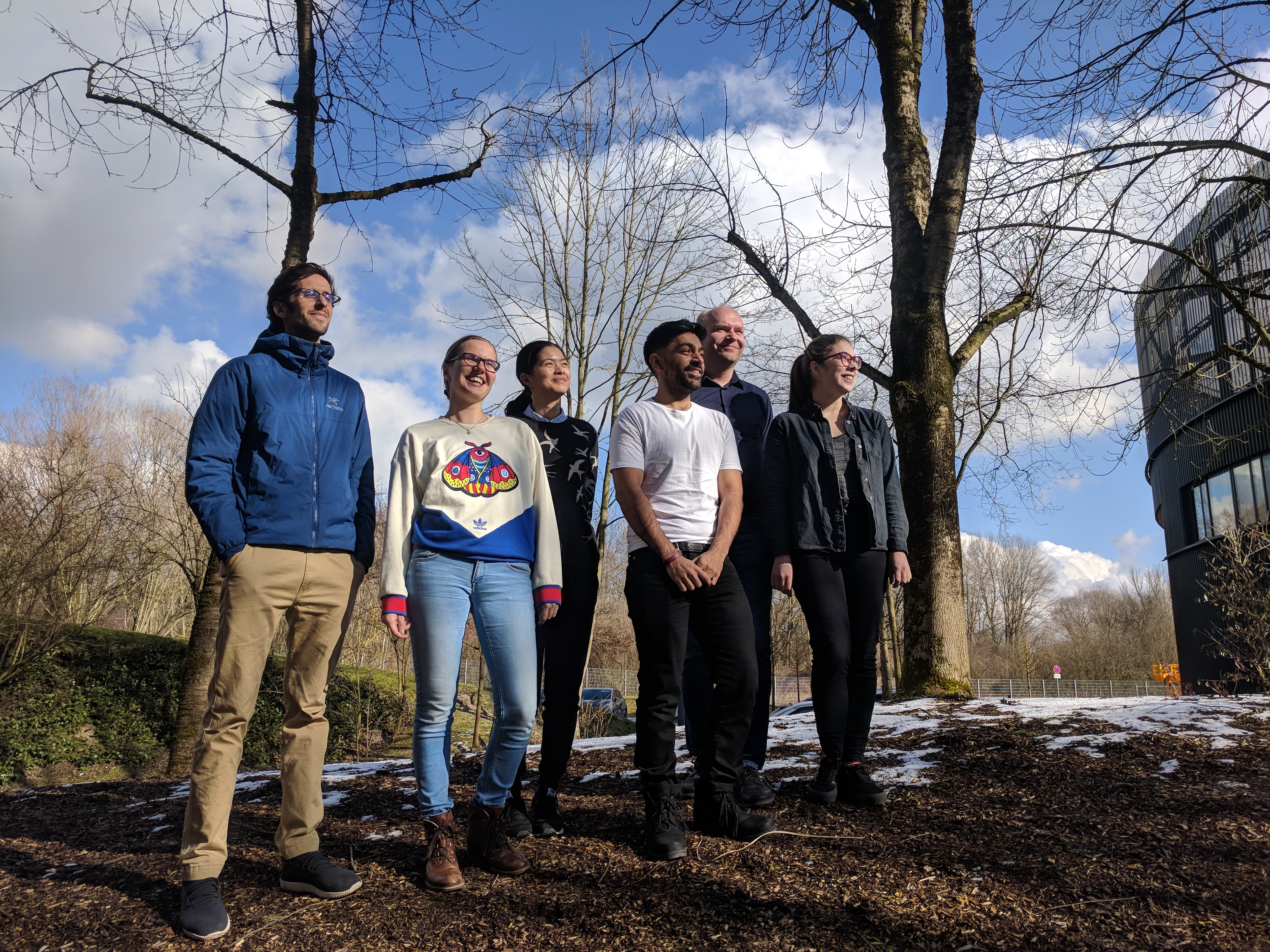
Galaxy Structure and Dynamics
The research in our group focuses on understanding the dynamical structure and evolution of stellar systems. In nearby galaxies and stellar clusters, we look for the 'fossil records' of their formation by constructing realistic dynamical models that fit their photometric and spectroscopic observations in detail. The latter include integral-field spectroscopy, observed motions and properties of individual stars, as well as (strong) gravitational lensing observations.
Our individual research interests are listed below - for information, see group members' websites or look at some of our recent papers.
Group Members
Group Leader

- Dr. Glenn van de Ven
- Dynamical models of galaxies
- Globular cluster dynamics
- Integral-field spectroscopy
- Gravitational lensing
- glenn@mpia.de
Postdocs
- Dr. Alessandra Mastrobuono-Battisti
- Dynamical evolution of dense stellar systems
- Globular clusters and Nuclear star clusters
- N-body simulations
- Planetary dynamics
- mastrobuono@mpia.de

- Dr. Anna Sippel
- Direct N-body simulations of star clusters,
- stellar evolution and dynamics
- sippel@mpia.de

- Dr. Prashin Jethwa
- Dark matter distribution of galaxies
- Hierarchical growth of galaxies
- Milky Way halo substructures
- Globular clusters
- Large surveys
- pjethwa@eso.org

- Dr. Ryan Leaman
- Dwarf galaxy evolution
- Globular clusters as probes of accretion events
- Semi-analytic models for galaxy assembly
- leaman@mpia.de
PhD students

- Alina Boecker
- Star formation history and metallicity enrichment
- boecker@mpia.de

- Francisco Aros
- Dynamical signatures of IMBHs in Globular Clusters
- Dark Matter in Dwarf Spheroidal Galaxies
- aros@mpia.de

- Gigi Leung
- Chemo-dynamical modelling of dwarf and elliptical galaxies
- leung@mpia.de

- Katja Fahrion
- Globular clusters and their dynamics in Fornax
- fahrion@mpia.de
- Yulong Zhuang
- Chemical evolution of galaxies and stellar populations
- zhuang@mpia.de
Undergraduate and visiting students

- Sophia Milanov
- Orbits and actions of globular clusters
- milanov@mpia.de
Collaborations
- Former group members:
- Dr. Ling Zhu
- Dr. Wilma Trick (now at MPA)
- Dr. Sassa Tsatsi
- Dr. Marie Martig (now at Liverpool John Moores University)
- Dr. Paolo Bianchini (former PhD student, now CITA fellow at McMaster University, Canada)
- Dr. Akın Yıldırım (former PhD student and Postdoc, now Postdoc at MPE in Munich)
- Adam Wheeler (Summer student at MPIA, Undergraduate student at Ohio State University, USA)
- Andrija Kostic (Summer student at MPIA, Undergraduate student at the University of Belgrade, Serbia)
- Ruggero de Vita (now a PhD student at the University of Melbourne, Australia)
- Remco van den Bosch (at MPIA)
- Alex Büdenbender
- Chen Fanyao (former MSc student now PhD student at Lund Observatory, Sweden)
- Ronald Läsker (Postdoctoral fellow at the University of Turku, Finland)
- Laura L. Watkins (STScI, Baltimore)
- Mariya Lyubenova (Kapteyn Atronomical Institute, Groningen)
- Vesselina Kalinova (University of Alberta, Canada)
- Sladjana Knezevic (Weizmann Institute of Science, Israel)
- Robert Singh
- Tomislav Grbešić (former BSc student and now MSc student at Freie Universität Berlin)
- External collaborators and regular visitors:
- Jesús Falcón Barroso (IAC, Tenerife)
- Agnieszka Rys (Humboldt fellow at the European Southern Observatory)
- Jorge Barrera Ballesteros (Postdoc at JHU, Baltimore)
- Nicola Amorisco (Postdoc at MPA and CfA)
- Lorenzo Posti (University of Bologna)
- Larger collaborations:
- SAURON Project
- CALIFA Survey
- SDSS-IV / MaNGA Survey
- SFB881 The Milky Way System
- DAGAL EU-ITN
- SMAKCED Survey
- HSTPROMO Collaboration
- Meeting organisation committees:
- Survival of Dense Star Clusters in the Milky Way System - Haus der Astronomie, Heidelberg - 19 November - 21 November 2018
- The exciting lives of galactic nuclei - Ringberg Castle - 26 February - 3 March 2017
- MPIA Summer Conference 2015 - HdA / MPIA Heidelberg - 6-10 July 2015
- 3rd DAGAL Annual Meeting - MPIA Heidelberg - 23-27 March 2015
- Gaia Challenge II - HdA / MPIA Heidelberg - 27-31 October 2014
- 3rd CALIFA Busy Week - Haus der Astronomie - 11-15 June 2012
- Dynamics meets kinematic tracers - Ringberg Castle - 10-14 April 2012
News
June 2018: Check out our upcoming conference MWSTREAMS in November at MPIA.
Oct 2017: Part of our group has moved to Munich, find them here!
Oct 2017: Sassa's press release about prolate galaxies is out! See the press release or check here for the paper! Sept 2017: Welcome to our new PhD student Francisco Aros!
Publications
Follow these links to a complete list of refereed and non-refereed publications from members in the group, while some recent publications (kept up to date by ADS) are given here:
Recent publications
Positions & Projects
PostDoc and PhD positions
The MPIA on a regular basis is accepting applications for a number of positions within the Galaxies and Cosmology department, including positions in our group. Please see this site for Postdoc and this site for PhD positions and for more information on how to apply.
MSc and BSc students
Various aspects of the research projects below, and of the research in our group in general, are well-suited for a bachelor or master project in astronomy, physics or computer science.
Follow the links for a brief description per project, but please contact any member of the group or send an e-mail to dynamics@mpia.de for further information and other projects and topics related to the research in our group.
Projects
- *
- *
- *
- *
- *
- *
- *
- *
- *
- *
- *
- *
- Lensing and dynamics
- Lensing and dynamics
- Gravitational lensing is the deflection of light from distant sources by the gravitational fields of intervening objects, while kinematics are the motions of stars or gas in the gravitational potential of an object. This means that both luminous tracers are sensitive to the total mass distribution, including possible dark matter, which can be recovered after subtracting the luminous matter.
The main goal of the project is to arrive an efficient method to fit lens and dynamical models -- individually as well as combined -- to the upcoming abundant gravitational lensing and kinematic data-sets. The method will enable robust and unbiased measurements of the total (including dark) matter density in galaxies at different redshifts, which in turn will provide important constraints on galaxy formation as well as cosmological models. - Shape of dark matter halos
- Shape of dark matter halos
- The concordance cold dark matter cosmological model predicts that galaxies are embedded in extended dark matter halos with a close to universal density distribution. While many studies have focused on the radial profile and in particular the predicted inner cusp, very few have considered the predicted triaxial shape of the dark matter density. Although dark matter itself is invisible, its mass affects the kinematics of luminous tracers; in particular, the triaxial shape is expected to cause non-circular motions in the observed gas velocity fields.
The main goal of this project is to investigate these effects of triaxiality and use non-circular motions observed in gas velocity fields of galaxies to constrain the shape of their dark matter halo. - Made-to-measure N-body method
- Made-to-measure N-body method
- The made-to-measure N-body method (hereafter M2M) introduced by Syer & Tremaine (1996) is closely related to Schwarzschild's orbit-superposition approach. Whereas in Schwarzschild's approach orbits are first integrated and then superimposed, in the M2M method these two steps are merged: trajectories are integrated and then particle weights adapted at the same time until some constraints are satisfied, such as an optimal fit to observational data. The advantage of the M2M method is that not only the particle weights can be adjusted, but also the particle distribution as a whole might evolve. This enables one to investigate stability and to efficiently adapt mass distributions which can be asymmetric and contain rotating components.
The main goal of the project is to complement our orbit-based modeling tools with the M2M particle-based method, and use the additional flexibility to also investigate galaxies such as the Milky Way with a rotating bar and a warped outer disk. - Stars around black holes
- Stars around black holes
- Since all large galaxies are believed to contain a central black hole (BH), these BHs are expected to undergo merging along with the galaxies themselves. Dynamical modeling tools such as our triaxial implementation of Schwarzschild's orbit superposition method, not only allows the measurement of the mass of such (merged) BHs, but also of the surrounding orbital structure. Aside from the large galaxies, we can also fit such dynamical models to kinematic measurements in dwarf galaxies and even globular clusters to establish whether they also contain a central (intermediate-mass) BH.
The main goal of this project is to use these studies to help understand the important scaling relation between BH masses and the host galaxy properties, from the high-mass to low-mass end. - Feeding the centers of galaxies
- Feeding the centers of galaxies
- A still open question is how the gas, that is needed to feed a central black hole and create an active galactic nucleus (AGN), is brought in from larger scales. Whereas bars are able to efficiently transport gas from the outer parts of a galaxy inward, the gas typically stalls at a radius well outside the inner hundred parsec. However, the continued dynamical friction may induce non-axisymmetric perturbations, such as nuclear spirals, along which the gas can move further inward. Unfortunately, the resulting deviations in the gas density are typically to weak for direct imaging and the obscuration due to assumed associated dust often leads to unclear or even missed detections. At the same time, the perturbations induce significant non-circular motions in the gas, so that velocity fields provide a cleaner way to detect the perturbations and even constrain the gas inflow velocity.
The main goal of the project is to use gas velocity fields of (spiral) galaxies to quantify mass inflow rate from larger scales down to the central black hole. - Close encounters in dense environments
- Close encounters in dense environments
- Shocks are present wherever matter is accelerated past the sound speed of the medium they are propagating through. A class of astrophysical shocks that is relatively simple to interpret are the so-called "Balmer-dominated shocks traditionally observed as limb-brightened optical fillaments around historical supernova remnants. The are characterized by strong hydrogen emission lines with a narrow (~10 km/s) and broad (~1000 km/s) component. By measuring the broad-line width and broad-to-narrow line intensity, we can constrain the shock velocity and electron-to-proton temperature immediately behind the shock front. Next, combining these measurements with the sometimes coincident non-thermal (X-ray and radio) emission observed, provides a rare opportunity to study cosmic ray accelaration in partially-neutral media. Moreover, we can constrain the geometry of the ambient magnetic field by measuring non-Gaussian components in the broad line caused by pick-up protons. Clearly, these measurements require high-quality spectroscopy of the narrow and curved shock fronts which moreover might overlap each other in projection along the line-of-sight.
The main goal of the project is to use the unqiue capability of high-spatial resolution intergral-field spectrographs to accurately trace and isolate shocks, allowing a careful analysis of shocks and their ambient medium.